
Positioning platform
Positioning Platform Chair
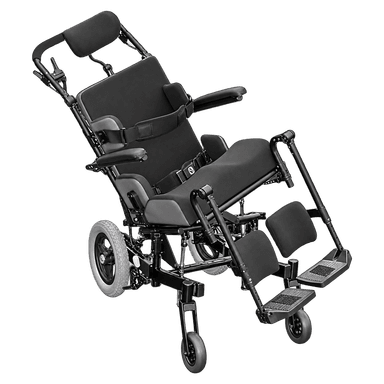
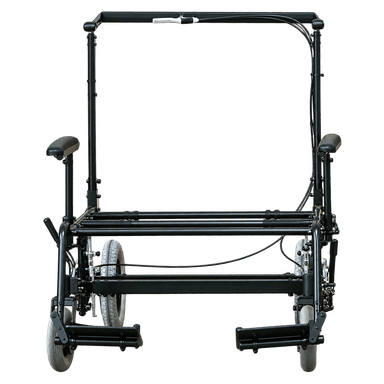
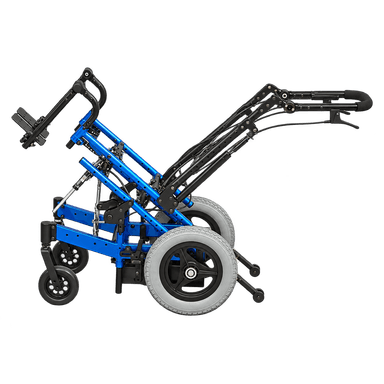
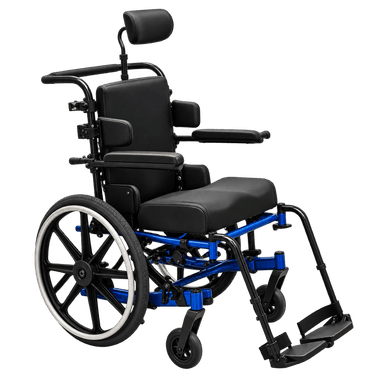
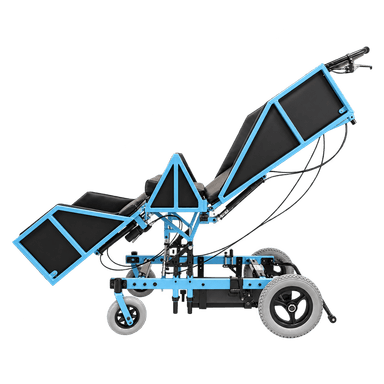
Designed for those requiring extensive posture support, this chair offers customizable positioning for maximum comfort and functionality.
- Capacity
- 400 lbs
- Base price
- $5,379.75
Category
When a patient cannot flex at the hips or knees, or cannot tolerate a seated position, a standard wheelchair or geri chair does not work. Gunnell builds two answers: a platform chair measured to the patient’s body angles, and a flat platform that tilts in space like a bed.
Positioning platform
Designed for those requiring extensive posture support, this chair offers customizable positioning for maximum comfort and functionality.
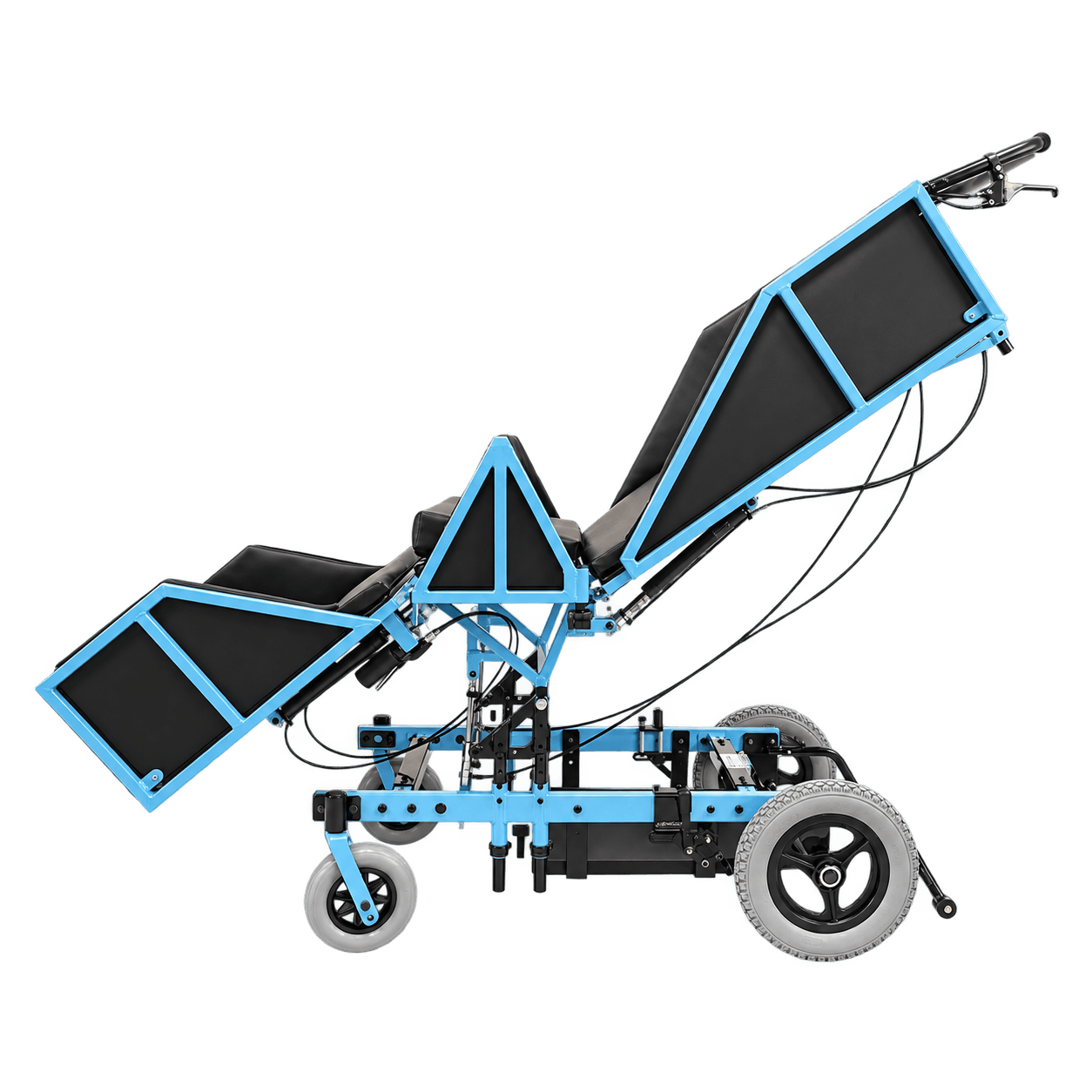
Custom platform: 400 lb, 45° anterior and posterior tilt, hip and knee angles built to specification, patented lateral tilt available.
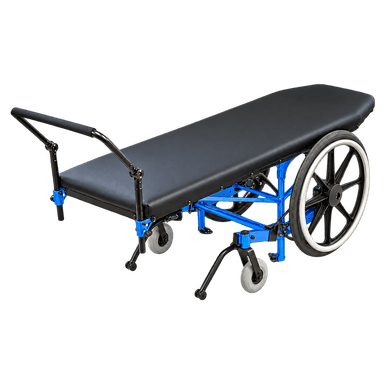
A padded flat platform that tilts in space as one piece, like a bed: the head and legs do not tilt independently.
Flat tilt-in-space platform
Built to order; ask for a quote.
Flat platform that tilts in space as one piece, like a bed: 400 lb, 22” × 70” standard or custom, patented lateral tilt available.
Positioning chairs are prescribed for patients with fixed contractures, severe scoliosis or kyphosis, extensor tone that pushes them out of a seat, or conditions that make a 90° hip angle impossible: late-stage neurological disease, long-term care residents who have been confined to bed, children and adults with profound disability. The goal is to get the patient up and out of bed, into a chair that can be tilted for pressure relief and moved around the facility, without forcing the body into angles it cannot take.
The Positioning Platform Chair (PPC) is Gunnell’s custom build for exactly this. Each one is engineered to the dimensions and angles the seating professional specifies: platform width and length, hip-to-back angle, knee angle, platform-to-floor height, and a 45° tilt range split between anterior and posterior. With anterior tilt it can bring a patient forward toward upright who would otherwise be confined to a bed or a gurney.
The Flat Platform Chair is the simpler build: a padded platform like the PPC’s, but flat, so the head and legs do not tilt independently. It is basically a bed that tilts in space, 22.5° anterior and 22.5° posterior or a custom split, for patients who need to lie flat and still be repositioned and moved around the facility.
Both can be ordered with Gunnell’s patented lateral tilt, which tilts the platform side to side as well, to fine-tune the patient’s center of gravity and find the best possible position. The PPC is built on the Rehab MAC platform base, part of the FDA-registered Rehab series, 510(k) K111636.
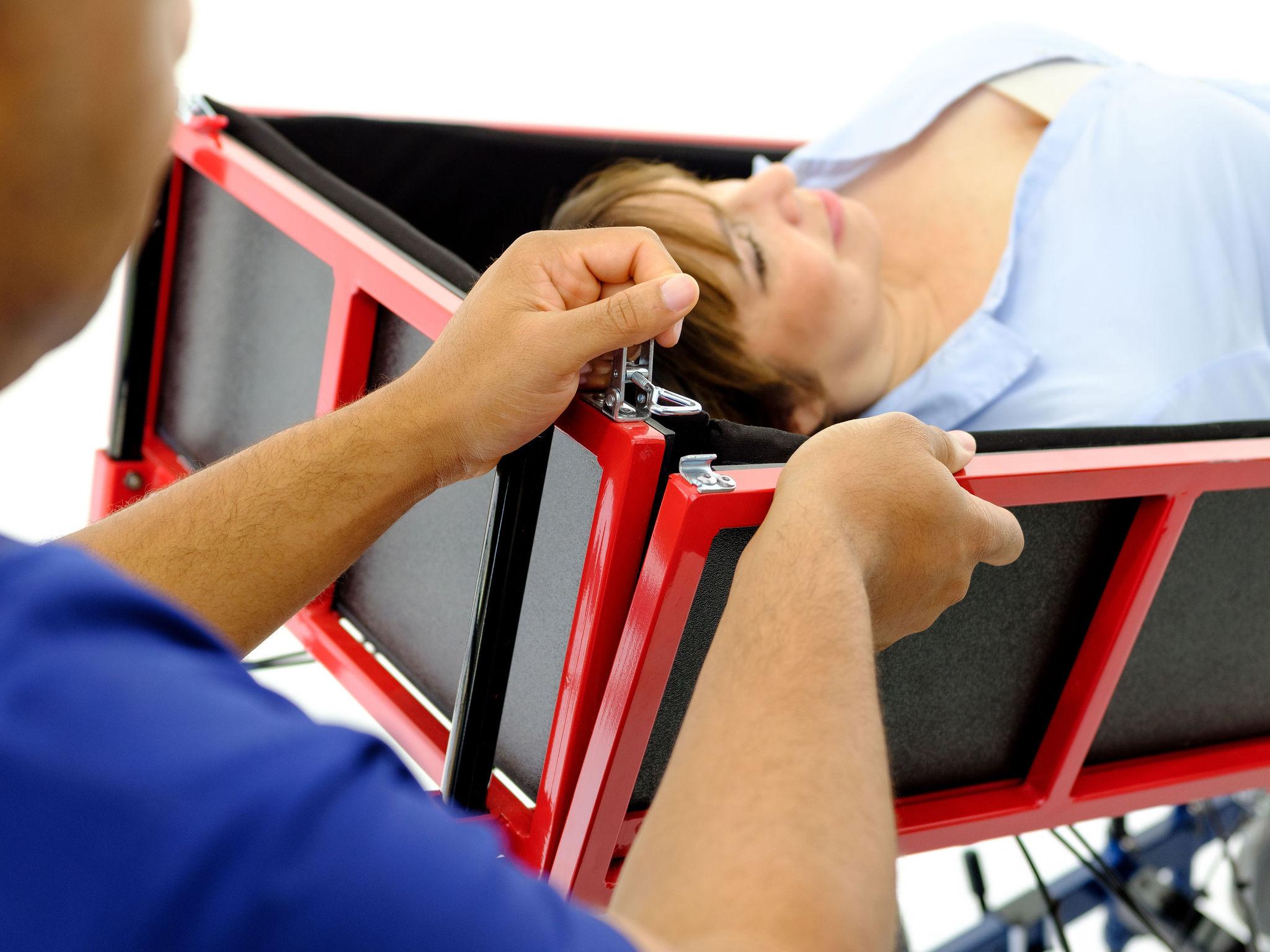
Dimensions and options published by Gunnell. Both chairs are configured to the patient before they ship.
Every Gunnell chair is adjusted to the patient before it ships. These are the decisions the quote needs.
If yes, with support, a tilt-in-space wheelchair will usually serve. If the hips or knees are fixed at an open angle, or extensor tone pushes the patient out of a seat, specify the Positioning Platform Chair with the angles the therapist measures. If the patient needs to lie flat, the Flat Platform Chair tilts as one piece, like a bed.
The PPC order specifies hip-to-back angle and knee angle (static or dynamic, 180° to 135° or 180° to 90°), platform width, the back, seat and leg lengths, and platform-to-floor height. Gunnell builds the chair to those numbers. The Flat Platform needs only the platform width, length and height.
The standard tilt on both platforms is 22.5° anterior and 22.5° posterior. Custom splits run from 45° anterior / 0° posterior to 0° anterior / 45° posterior in 5° steps: more anterior tilt to bring the patient toward upright, more posterior for pressure relief.
Gunnell’s patented lateral tilt tilts the platform side to side through ±22°, on top of tilt-in-space, so staff can fine-tune the patient’s center of gravity. It is available manual or powered on both chairs.
Fixed, flip-down, angle-adjustable or removable 8” sides, padded rails, a stroller handle set to staff height and caregiver-operated disc brakes make transfers and transport safer on a ward.
Gunnell lists the Positioning Platform Chair (Rehab MAC positioning platform option) under E1161. The Flat Platform Chair is quoted as a custom item, and the supplier determines the code for each claim; platform dimensions, rails, sides and padding are quoted as custom items on both.
HCPCS codes provided by Gunnell are for reference only. Providers are responsible for determining the appropriate billing codes. Please contact a Medicare professional for further assistance.
Platform chairs are a product Gunnell developed by listening to customers. The need for a bed or gurney has always been there, but tilt-in-space, recline and leg rests like those on a wheelchair were not available on one. The Positioning Platform Chair provides them on a platform built to the patient.
The Positioning Platform Chair has separate back, seat and leg sections set to the patient’s hip and knee angles. The Flat Platform Chair is flat: the head and legs do not tilt independently, so it is basically a bed that tilts in space.
Gunnell’s patented lateral tilt moves the platform side to side through ±22°, in addition to tilt-in-space, to fine-tune the patient’s center of gravity and find the best possible position. It is an option that no other chair offers, manual or power, on both chairs.
A geri chair is a stock recliner on wheels. The PPC is built to the patient’s measurements and body angles, tilts 45° anteriorly and posteriorly, carries 400 lb and is serviced by the factory that made it.
Yes. Gunnell builds and services its own chairs and will do just about any custom modification that is needed.
Both are padded and covered to specification: 1” to 6” padding on the PPC, 1” or 2” poly or Sunmate foam on the Flat Platform, with washable vinyl, Dartex or Rubatex covers.
Customized products take longer than the four-week standard lead time; the time is stated with the quote.
Send the therapist’s measurements and angles, or describe the resident, and Gunnell will propose the PPC or the Flat Platform Chair with a configured quote and lead time.
Whether you’re seeking a custom mobility solution for yourself, a loved one, or your clients, we’re here to assist you throughout your journey.
Models, number of chairs, care setting and the measurements you have. Gunnell replies with a configured quote and lead time.
Capacity, tilt, recline, widths, depths, heights, wheels, brakes and codes side by side. Printable for tenders.
Questions about a patient, a configuration or a chair you already have go straight to the factory that builds them.